
Travel with purpose
Slow Tourism encourages travellers to rethink the journey itself. The way we move between places becomes part of the experience.
Agents of Change · Unhurried Horizons
Agents of Change explores how tourism can become more sustainable, meaningful and connected to local communities — through education, research and innovative Slow Tourism practices.
Discover the principles of Slow Tourism, explore educational opportunities and find inspiration for more conscious journeys across Europe.


Why Slow?
Slow Tourism is about reconsidering how a journey is experienced. The focus shifts from moving through as many places as possible towards engaging more consciously with the journey and the destination.
This changes the questions we ask when travelling. Instead of only asking what we can see, we can also consider how we get there, how we spend our time and what effects our choices have on the places we visit.
The journey does not have to be something that simply happens between home and destination. It can become part of the travel experience.
Spending more time in a destination can create space to engage with places and experiences beyond a short list of attractions.
Travel choices are connected to environmental, social and local effects. Slow Tourism encourages travellers to consider these effects as part of the journey.
At a glance
Slow Tourism can be understood through several connected principles that influence how we travel, experience places and interact with destinations.
Slow Tourism encourages travellers to rethink the journey itself. The way we move between places becomes part of the experience.
Spending more time in a destination creates opportunities to understand local culture, landscapes and communities.
Slow Tourism focuses on meaningful encounters with local traditions, people and environments.
Tourism decisions influence destinations socially, environmentally and economically. Slow Tourism considers these effects.
Slow Tourism aims for deeper relationships between travellers, destinations and local communities.
Compare
Tourism is not only about where we travel. The way we reach a destination, the effects connected to tourism and the way we experience a place are all part of the journey. Switch between the three perspectives.
Future project findings can expand this comparison with specific examples, research results and practical insights from the partner regions.
From idea to practice
Slow Tourism does not require a sabbatical. It starts with the next decision you make about a journey — how you get there, and how long you stay.


Night train, ferry deck, a bike path along a river — the route can be the part of the trip you remember.
Pick one place, stay longer, use the region as your radius. Fewer transfers, more understanding.
Markets, neighbourhoods, local transport. The ordinary is where a destination becomes a place.
Slow Travel
Six European partner locations provide different regional perspectives on tourism, communities and sustainable development — from the Gulf of Finland to the Mediterranean.
Discover Slow Travel experiences and local perspectives from our Finnish partner region — forests, lakes and river valleys minutes from the city.
Laurea University of Applied Sciences · Coordinator
Explore Slow Tourism along the Baltic coast, where the fjord runs straight into the city and ferries connect the region with Scandinavia.
HAW Kiel

Discover local experiences and Slow Travel ideas from Estonia and the Tallinn region, where a medieval old town meets a living city.
Tallinn University of Technology (TalTech)
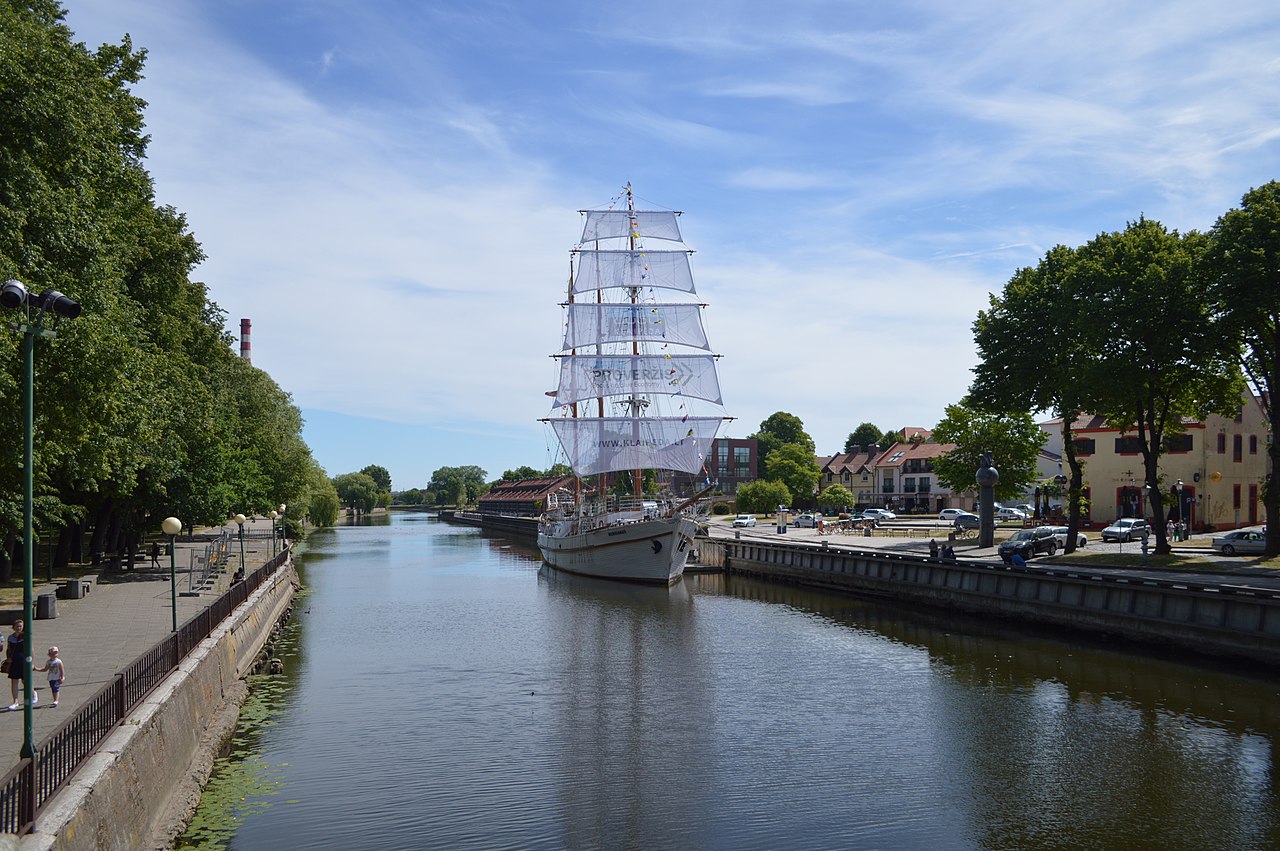
Explore Slow Tourism on Lithuania's Baltic coast — a port city and the gateway to the dunes and pine forests of the Curonian Spit.
Klaipėda University

Discover Slow Travel experiences, regional perspectives and local ideas from Slovenia — a capital with a car-free centre, Alps and coast nearby.
University of Ljubljana

Explore alternative ways to experience Barcelona and discover Slow Tourism perspectives from Catalonia — and from a city that knows overtourism well.
CETT Barcelona School of Tourism, Hospitality & Gastronomy
Learn
The project develops new educational formats for higher education: a MOOC, a Study Module, a Learning Tour and Open Educational Resources.
An intensive international study programme in which students explore Slow Tourism through learning, travel and experiences across the partner regions.
An open online course that makes Slow Tourism education accessible to learners beyond the participating universities.
A comprehensive module designed so that higher education institutions can integrate Slow Tourism into their own curricula.
Presentation and teaching material developed within the project.
Video resources that support teaching and self-study.
Project examples that can be integrated into educational activities.
Studies, publications and methodology from the work packages.
Why Slow? · Self-Check
Discover how your travel habits relate to Slow Tourism. There are no right or wrong answers — this self-check helps you reflect on your personal travel style and discover opportunities for more conscious travel.
The Project
Agents of Change connects six European higher education institutions to develop knowledge, learning opportunities and practical approaches for a more sustainable tourism future.
The project examines values and attitudes related to sustainable tourism, develops educational opportunities and creates innovative Slow Tourism products together with regions, communities and tourism actors.
Project structure
Ensures effective coordination, communication and cooperation between all project partners throughout the project period.
Investigates values, attitudes and impacts connected to Slow Tourism and sustainable tourism development.
Develops future Slow Tourism concepts and products together with regions, local communities and tourism actors.
Creates digital learning materials, educational resources and a community for exchanging knowledge about Slow Tourism.
Timeline
The project develops step by step through research, innovation and educational activities.
The consortium begins cooperation and establishes the foundation for research, education and innovation activities.
Partners develop research activities, educational formats, learning materials and Slow Tourism approaches.
Project outputs, knowledge and learning resources are shared with the wider community.
European Consortium
By bringing together institutions from Northern, Central, Eastern and Southern Europe, the project explores how Slow Tourism can be understood and developed in different contexts. Coordinated by Laurea University of Applied Sciences, September 2024 – August 2027.
Erasmus+ KA2 Cooperation Partnership in Higher Education (KA220-HED). Funded by the European Union under the Grant Agreement no. 2024-1-FI01-KA220-HED-000250084. Views and opinions expressed are those of the author(s) only and do not necessarily reflect those of the European Union or the EACEA. Neither the European Union nor the EACEA can be held responsible for them.
Follow the project, discover new perspectives and join a European community exploring the future of Slow Tourism.